I’m thrilled to announce that Shortcuts for Writers just got a fresh new makeover. As a writer, editor, and coach, I know how important it is to keep things organized and inspiring—and that includes my website. I wanted to make it even easier for you to navigate my resources for authors and explore everything I offer.
What’s Revamped on the Site:
Home Page – Discover how I guide authors in transforming their stories, from editing services to self-editing courses and productivity tools that help you write with confidence, clarity, and creativity.
About Page– Take a peek at my writing journey, from my early days as a published author to my passion for helping writers achieve their full potential.
Editing Service Page – I now offer expanded editing services, including the Full Story Edit, First Impressions for your opening pages, and the Pitch Perfect package for returning clients.
Shop Page– NEW! This one-stop shop pulls together all my offerings, including my signature courses, quick-win courses, freebies, and even my books.
Contact Page– I also set up a brand-new Contact Page to make it easier for you to get in touch. I’m always happy to connect and answer any questions you might have.
Blog Page – The blog page now has a cleaner look, making it easier than ever to explore past posts. With an updated layout, you can quickly find topics that interest you, from writing tips and self-editing advice to productivity hacks for authors.
As you explore the website, you’ll also see brand-new images from a recent photo shoot that perfectly capture the creative, approachable vibe I wanted for the site.
In addition to Shortcuts for Writers, my author website also received a major overhaul, and I’ve connected the two sites with navigation links so you can easily move between them.
I hope you’ll take a few moments to browse the redesigned site. Whether you’re here for editing services, courses, or just to learn more about my journey, I’m excited to welcome you to Shortcuts for Writers.
Hi there! I’m Stacy Juba, an author, freelance editor, and the founder of Shortcuts for Writers. I’d love to connect. If you’re a writer, here are a few ways we can work together:
Finding the perfect book cover design concept can be a stressful task. Book covers should give readers a sneak peek of what to expect and set an overall tone for the journey ahead. Without a strong cover, readers may decide against investing their time and money into reading your book.
As a freelance editor, I love it when clients share cover concepts for a manuscript I’ve edited. It’s fun to give my two cents and see how the final cover turns out. Sharon Waters is a longtime client and friend who I’ve worked with on several of her books. I didn’t think the original title and cover design for her latest project did her excellent memoir justice. I’ll let her tell you about her path to finding the perfect book cover and title.
I entered the tech business early in the Internet evolution and when websites entered the picture, I was creating them both as a regular job and as a personal sideline. They were so new I had to talk prospective clients into letting me design a website for them, sometimes for pay or even in exchange for their products or services.
As a new medium, websites quickly became the focus of marketing study. I learned that text and images must capture the prospective audiences’ attention and interest within the first seven seconds of viewing. With so much competition in bookstores and online now, I’m sure those first few seconds are even more important. That’s the job of your title and book cover.
I worked on ideas for my latest book for fifteen years and it morphed from a I’m-not-sure-what-it-is, to a social commentary, to finally, a memoir. The narrative never would have worked until I limited my topic to my own experience. But I blundered by staying stuck with my original title and cover concepts and trying to convince myself they’d work; my content came together, but my title and cover were as vague as the content I started with.
My editor, Stacy, to the rescue! She commented that nudity (the image I had chosen was an illustration, but still, a mostly nude subject) would be rejected by publishers and promoters. The last thing I needed was to begin with that strike against me. Plus, my image choice was arresting, but not indicative of my content.
With my content complete, I went back to the drawing board for my book cover. It was a miracle that I had saved a picture of me that was published in a national magazine when I was eight—it showed me perched precariously atop a post. It was the perfect example to indicate the precarious situations I had faced throughout my life. My title, Tipping the Balance: A Memoir of Life on the Edge, resulted from choosing that image.
I prefer to design my own book covers, and my years designing websites has helped me accomplish that. For a memoir, I wanted the cover image to express something personal, not manufactured or slick. The choice of a faded image from the 1950s expressed it perfectly. A glance conveys that it’s about an individual, a young girl who grew up in those times and early on began to experience the precariousness of her life circumstances. With the pushback to find a better cover and title, I couldn’t have done better with the revision.
About The Author
The variety of themes for her books parallel Ms. Waters’s diverse lifestyles. Raised in a small upper New York state town near the Lake Ontario, she attended a traditional liberal arts college nestled near the Appalachian region. From there, she broadened her constrained world with visits to the creative hubs of New York and Boston and jaunts through Europe, South America and the United States.
She began her adult life as a conventional housewife mirroring her conservative upbringing, then became a single mother of three, returned to school, climbed the corporate ladder in technology, and finally dropped out of everything to become a vagabond wandering the eastern seaboard with her two dogs and a cat. Wherever she journeys, Ms. Waters strives to understand the landscapes, social cultures, and people around her. She has studied her topics in-depth, and her personal experiences enhance her perception of what many others must face. Throughout her shifting locations and lifestyles, animals have been her constant companions, from a goldfish that accompanied her to college to her beloved dogs that populate her books. People who love animals find particular comfort in her life stories.
Ms. Waters is always seeking the next place, the next experience. She explored a variety of interests from keeping an assortment of animals amounting to a petting zoo, to serving as a crew member on a tall ship. She achieved her open water diving certificate at the age of sixty-nine, completing it on a cold, windy day in November on the Atlantic seaboard. But she was just getting started. She had settled near the ocean, but then reduced all her possessions to what could fit in an RV and traveled for three years with just her pets.
Although her topics are varied, she has experienced each one of them profoundly and hopes to connect with her readers through the telling of her adventures, joys and sorrows. Ms. Waters broke through personal boundaries and cultural barriers to find satisfaction in a self-defined life. Through her many transformations, Ms. Waters found strength, confidence, and finally peace. She shows how learning and facing challenges can be successful at any age and in unlikely circumstances. She hopes her readers relate, enjoy, and find their own serenity through her writing.
She has authored books about family relationships (Estrangement of Parents by their Adult Children – first and revised second editions), her three-year odyssey in an RV (Three Years in a Walmart Parking Lot), the deep bond she’s shared with her animal friends (Milo, Fear and Joy in a Magic Dog) and her memoir including social reflections from the 1940s to the present (Tipping the Balance: A Memoir of Life on the Edge).
About The Book
Ms. Waters’s bittersweet memoir reveals an emotionally turbulent life teetering on the edge between anguish and resilience. In this manifesto-turned memoir, she writes of loves and loves lost, survival, forgiveness, and adventures in faraway places. Told in vivid anecdotes, this poignant story spotlights the precarious balance she maintains when her family and the people she meets impact her self-esteem and limit her ambitions in a male-dominated world, all the while examining the events and values from the 1940s to the present.
The author survives ill-fated relationships, being swept out to sea, confronting an anaconda, raising children after divorce, and struggling with alcohol and prescribed drugs. Her recovery follows by crafting a dollhouse depicting good and evil, joining a tall ship crew, escaping on a three-year RV odyssey from New England to Florida with her pets, and befriending a wild bird.
In spite of childhood illnesses and family trauma, summers gardening with her Gramma become a life-long reminder of what health and contented living are like. A zoo of animals, especially her Schipperke dogs, offer Ms. Waters comfort and salvation along her way. Just in time, she discovers that there’s no place like home in a garden of her own making.
Hi there! I’m Stacy Juba, an author, freelance editor, and the founder of Shortcuts for Writers. I’d love to connect. If you’re a writer, here are a few ways we can work together:
Have you ever wondered how to become a ghostwriter? My friend JB Favour, a ghostwriter and coach for aspiring ghostwriters, stopped by to explain how to become a “Ghost” and busted some common myths. Read JB’s post below.
If I had a dollar for every time someone asks me how they could become a ghostwriter–I’d be able to buy out my favorite Nike sneakers in every color possible. Thing is, ghostwriting has become a buzzing topic especially with the mouthwatering pay attached to it whenever it makes the news. Emphasis on the news, because not every ghostwriter gets to make headlines unless by facts you are ghostwriting for a public figure or celebrity. Now how many of us actually belong to that elite category? No shades, I’m not there either.
Now that we’ve gotten that out of the way, back to the million dollar question. How does one become a ghostwriter? In this quirky yet informative article, I’ll be guiding anyone who has ever wanted to become a Ghost through some common myths and busting them along the way.
Let’s go!
Myth 1: Anyone can become a ghostwriter.
Yes and no.
How can anyone become a ghostwriter? I’ll answer this in simple, plain baby language.
By waking up one morning and declaring that you wanna become one! Seriously, mindset first. You have to actually want it enough to get it. And I say this because you will need to put in some serious work and it is only if you want it bad enough that you can stick around till the end.
Next, you have to brush up your writing skills if you don’t already have one. Many writers recommend reading as one sure way to do this and I gladly agree. Books will open you up to a lot of awesome vocabulary and give you an idea of how a good book should look and sound. If you don’t have a strong command of language–abort mission. One of the key requirements of ghostwriting entails being able to express and communicate accurately in the language of your specialization. For example, if your primary writing language is French, what good will it do you to try writing in French without understanding French grammar or tenses first? Now you get me.
Fixing up your fluency in the language of your choice is my ultimate first step recommendation. Take spelling classes, grammar lessons, vocabulary classes, dust your writing and comprehension skills first.
So, nope! Anyone who doesn’t have a good command of the language they intend to write in cannot become a ghostwriter. Well, realistically they can tag themselves ghostwriters on any freelance platform of their choice as is common these days, but we all know how that pans out in the long run.
But, if this doesn’t apply to you – congratulations, you may now proceed to;
Myth 2: You can’t have proof of your work.
Big fat lie. Being a ghostwriter doesn’t mean you have no proof of work. Sure as Ghosts who typically sign an NDA (Non-Disclosure Agreement), you cannot disclose that you are the ghostwriter for a work you do unless by sheer will the author decides to give you credit in any way. Typically by ghostwriting, you’re signing away the rights to any material or work you develop under the limitations of an NDA. So how then can a Ghost show that they truly are a writer?
Easy peasy. We write. Tons of ghostwriters have gone on to become bestselling authors of their own book. So while you cannot claim a work you’ve ghostwritten, you can write yours. Next, you definitely need to have an online digital footprint. I’m sorry but people should be able to find out who you are with a simple Google search or you’re not serious about business.
Build a portfolio or get a simple website and leave samples of what your writing style looks like. There are so many options and if you want to start with a free one–I’d recommend Journo Portfolio. Nope, this is not an ad, it is the one I use and I’m a big fan of the analytics feature it allows users for the free version. Grab a template and edit it to your style and voila – you can start uploading samples.
Myth 3: You must be on freelance platforms like Fiverr, Upwork, and the rest to get clients.
Who says so? No seriously, who is selling this lie? As much as this is not in any way a discredit to those who are actually getting paid their worth on these platforms, the majority of freelancers can agree with me when I say, these places house the most modern form of slavery. The constant bidding and bargaining, the bulk jobs and the fact that these platforms leave freelancers at the mercy of prospective clients who can simply wake up one morning and cancel an order. Talk about audacity–yep, you can find it all on these platforms.
Every time a newbie Ghost approaches me, I hear one sad, frustrating story after the other. So here’s a secret for free.
In the last two years, the least I’ve ever earned for ghostwriting a book was $2000 – $2500 for a word count of 50k words. Prices go higher depending on project size, amount of research needed and of course if I’ll be doing an interview, I’ll get paid for that too. Memoirs and autobiographies which have been my special forte for a while have different rates beginning from $3000 – $15,000 depending on the project.
All this and never having to pitch on any of these freelancer sites. In my early days when I first started, I signed up on as many of them as possible in a bid to get one single gig. Soon enough after burning out, I quit and found a way to get myself to the kind of clients I wanted without having to engage in pitiful bargaining.
Today, I teach those who I coach how to make a career out of ghostwriting, doing it their way and breaking free from the industry’s stereotypes. Listen, there are clients who will PAY. You’ve got to believe this.
You don’t have to offer work for free, accept poor rates, or even work with middle men or agencies just to get gigs. And you certainly don’t need freelancing platforms to earn. You can be a ghostwriter by simply being good at what you do and learning to find your type of clients the right way.
Lastly, there are several pathways to having a successful career in ghostwriting and mainstream is often not the only stream. Carve your path and walk the walk. It can be hard, but there’s nothing consistency, effort and knowledge won’t get you.
More About JB Favour
Meet JB Favour, a passionate ghostwriter with a talent for turning ideas into captivating stories. With over five years of experience in the industry, JB has worked with a diverse range of clients, from memoirists to business leaders, trauma/abuse survivors and inspirational icons to bring their stories to life.
As a seasoned wordsmith, she understands that everyone has a unique story to tell, and is honored to be entrusted with the task of sharing it with the world. With a keen eye for detail and a talent for capturing the essence of a person’s voice, JB has helped countless clients to connect with their audience and inspire others with their message.
But JB’s work isn’t just about writing words on a page–it’s about creating a legacy. By helping people to tell their stories, she believes that they can make a lasting impact on the world and leave a meaningful legacy for future generations.
When she is not ghostwriting, she is running her agency FAVES_PEN, which is a content, branding and marketing agency for businesses and entrepreneurs who want to grow sustainable brands. In her free time she enjoys watching movies, listening to BTS and binging on K-drama.
Hi there! I’m Stacy Juba, an author, freelance editor, and the founder of Shortcuts for Writers. I’d love to connect. If you’re a writer, here are a few ways we can work together:
Recently, I was featured on three podcasts for writers and book lovers, and wanted to tell you a little bit about each appearance. As you may know, I LOVE talking about books and writing. I’m grateful to have had the chance to do both during these interviews.
Between the Covers
First, host Stephanie Larkin of Red Penguin Books interviewed a few contributing writers to the new release, Launch Pad: The Countdown To Writing Your Book. This craft book is designed to help writers navigate the emotional ups and downs of finishing a novel, and was led by Emma Dhesi and Grace Sammon.
The episode features interviews with Susanne Dunlap, author of The Courtesan’s Daughter and a certified book coach; Meredith Stoddard, author of The River Maiden: Once & Future Series; Carol Van Den Hende, author of Goodbye, Orchid; and myself.
We discussed our writing processes, what’s inside the Launch Pad book, and valuable tips for writers.
I also had a lively discussion with Liz Bullard on the eReads Podcast. We discussed things like the perfect desk chair and how my chiropractor reprimanded me for working on my recliner. ☹️
Last year, when I was having neck and upper back soreness, he advised me to buy an ergonomic desk chair with a headrest. Some of you know my obsession with office supplies.
I mean, it takes me 45 minutes to pick out pens. Imagine how long it took for me to pick out a $300 chair.
I felt like Goldilocks, sitting on all the office chairs at Staples.
Too hard.
Too soft.
Unfortunately, I didn’t find anything just right, but I found one that was comfortable enough . . .
Well, after I bought a special cushion on Amazon.
I still occasionally use my Chromebook on my recliner, but I’m much more aware of my posture!
Anyway, Liz and I talked about a lot more than desk chairs and chiropractors.
During the episode, Liz also asked me to share a writing prompt. I gave her one that I used to use a lot: I remember. All you do is free write starting with the words, I remember . . . and see what comes out.
Last but not least, my good friend Kat Caldwell interviewed me on her Pencils & Lipstick podcast. This was the third or fourth time I’ve been on the show, and Kat and I always have a good time. The topic of the day was body language and nonverbal communication.
We delved into what those terms mean for writers, why it’s important, common mistakes that writers make, how to freshen up your characters’ emotions, and how to write creative emotional descriptions. You can listen to the episode here or watch it on YouTube below.
Hi there! I’m Stacy Juba, an author, freelance editor, and the founder of Shortcuts for Writers. I’d love to connect. If you’re a writer, here are a few ways we can work together:
If you could use some help planning your writing schedule, then have I got a treat for you.
Recently, my friend Daria White interviewed me on her podcast Writer in the Making. Many of you know that I teach an in-depth course called Time Management Blueprint for Writers: Transform Your Life and Finish Your Book. In this course, I teach my simple, proven four-step framework for how to become more organized, productive, and creative in all areas of your life, including writing.
I also teach a course called Book Editing Blueprint, A Step-By-Step Plan to Making Your Novels Publishable, a complete step-by-step system that teaches you how to spot the flaws in your novel and fix them so that you can ditch the overwhelm, save time and money, and better your chances of impressing readers, agents, and publishers. In addition, I work with authors one-on-one as a freelance developmental editor and line editor.
Daria teaches a course called the No Time Writer, showing you how to use time-saving techniques to unleash the writer within and discover your unique writing process. Also through her one-on-one premium mentorship, she helps new and ambitious authors discover their unique writing system that works perfectly for them.
As an author of over 10 books and over 300 podcast episodes, Daria has helped more than 100 students from all over the world find the inspiration to finish their first drafts and become one step closer to publishing their books.
As you can imagine, Daria and I have a lot to say on the subject of time management and writing routines. During the podcast episode, we shared our favorite tips on how to plan out your writing year. It was a fantastic conversation packed full of actionable advice about weekly planning, quarterly planning, and how to break down big tasks like editing a book into smaller steps.
Listen to the podcast episode about planning your writing year here:
Hi there! I’m Stacy Juba, an author, freelance editor, and the founder of Shortcuts for Writers. I’d love to connect. If you’re a writer, here are a few ways we can work together:
As many of you know, I was a journalist before I became a freelance editor and online course creator. Although I had published a YA book before getting into journalism, my job working for a daily newspaper inspired my first adult novel, Twenty-Five Years Ago Today, about an obit writer and aspiring reporter who becomes obsessed with solving a cold case.
That’s why when Asha Belle Caldwell approached me about a guest post on why journalists make great novelists, I loved the idea. My reporting experience definitely improved my overall fiction-writing and editing skills. I used to handwrite my first drafts until one of my editors caught me writing a School Committee meeting article in a notebook, shook his head vigorously, and said, “There’s no time for that. You have to write on the computer.” That skill quickly transferred to my novels. Journalism also taught me about the importance of hooking the reader with a lead, doing research, meeting deadlines, and much more.
Below, you can read Asha Belle’s article delving into the topic of why journalists make good novelists.
From the outside, journalists and novelists seem like they belong at the opposite ends of the writing spectrum — one dealing with hard reality and the other with made-up worlds and scenarios. Yet the opposite is true and many of the skills journalists have learned have helped them become novelists. For example, author Sara Goudarzi outlines that her science journalism background helped her cope with the unfamiliar loneliness of writing a novel.
And she is far from being the only journalist- turned author. Some of the most popular authors that we know of today started out as journalists. Mark Twain, the icon of sharp-witted admonishment about racism and slavery, started out as a journalist. Fantasy author Neil Gaiman, whose richly imagined fantasy works have consumed pop culture, also started out as a journalist. Other remarkable novelists belonging to this roster include Joan Didion, Ernest Hemingway, Charles Dickens, and a score of others.
Journalists’ interaction with the real world allows them to scavenge great material for their novels. Here are a couple of reasons why.
Many journalists start with fiction
Writers are often avid readers, and fiction is often the first encounter we have with literature as children. So the most straightforward explanation for why journalists make great novelists is that many of them were already reading or writing fiction. Even renowned fiction authors like Arundhati Roy and Zadie Smith have come to contribute to established publications like The Guardian and The New Yorker to provide critique on culture and current events.
Of course, there is a wide gap between the creative process for journalism and fiction. But working under the pressure of deadlines and having to practice economy of words is sure to enrich journalists’ writing style and discipline, even when applied to writing novels.
Journalists are storytellers
It’s time to break the myth — journalism is never objective. This is because all successful journalists and other formal writing professionals have one common essential communication skill: a commitment to storytelling. Even though the discipline focuses on the facts and upholds truth, at every point in the writing process, journalists will be framing the narrative in a way that gets the readers to empathize with their version of the story.
The Pulitzer Prizes annually award journalists for exceptional reporting. For example, in 2020, Ben Taub of the New Yorker won the Pulitzer Prize for Feature Writing for a deeply perturbing, and yet melodically lyrical, account of a man unjustly kidnapped and detained at the Guantanamo Bay detention center. His works exhibit the skillful crafting of a real-life story to illustrate the emotional depth of what would otherwise be an unheard story.
Journalists have to choose which elements to highlight and whose perspective to prioritize. In a similar manner, these skills of selecting elements and enhancing perspectives are useful in the novel-writing process when writers have to set the scene, drive their theme forward, and get the readers to feel the way they want them to.
Journalists learn about the world
Fiction does not exist in a bubble. It’s important to portray real human emotions and create imaginary settings that are believable to make your story convincing for your readers.
Journalism serves as an incredible resource for learning about the world and acquiring information that can benefit novelists. Journalists are always meeting new people and visiting new places. The late Joan Didion, for instance, wrote about California’s hippie counterculture in the 60s and 70s with unconventional novel-like qualities. She also observed and critiqued Hollywood in all its glamour and horror, and wrote about pivotal events like the Manson murders and the women’s movement.
Ultimately, journalist training offers writers the opportunities to expand their perceptions of reality in ways that can be explored further in fiction.
When it comes to the creative process, writers aren’t that much different from one another. At the heart of telling stories are sensitivity to the world and the impulse to portray it with your words. Journalists-turned-novelists prove that when it comes to the creative process, you can derive endless material from the world around you.
Hi there! I’m Stacy Juba, an author, freelance editor, and the founder of Shortcuts for Writers. I’d love to connect. If you’re a writer, here are a few ways we can work together:
If you could use some editing tips, then I’d love for you to check out my interview on The Writer’s Tribe Talk Show. Host Elsa Kurt asked me lots of insightful questions about my writing journey, how I became an editor and online course creator, and the common mistakes that writers make.
We talked about the ups and downs of the publishing path and why most new authors are flabbergasted when they read their first editorial letter. You’ll hear about the shock I experienced as a teen author receiving editing feedback.
We also shared some helpful advice for busy authors. You can watch the interview on YouTube (see the video below).
Be sure to check out other episodes of the podcast as well. Elsa talks about all things writing, publishing, and promoting. She has interviewed authors in many genres and has also discussed topics like TikTok for Authors, Imposter Syndrome, your elevator pitch, and roadblocks to writing.
Hi there! I’m Stacy Juba, an author, freelance editor, and the founder of Shortcuts for Writers. I’d love to connect. If you’re a writer, here are a few ways we can work together:
I love doing interviews on podcasts and YouTube channels for readers and writers. Below, you can find out more about my two latest conversations and how to listen in.
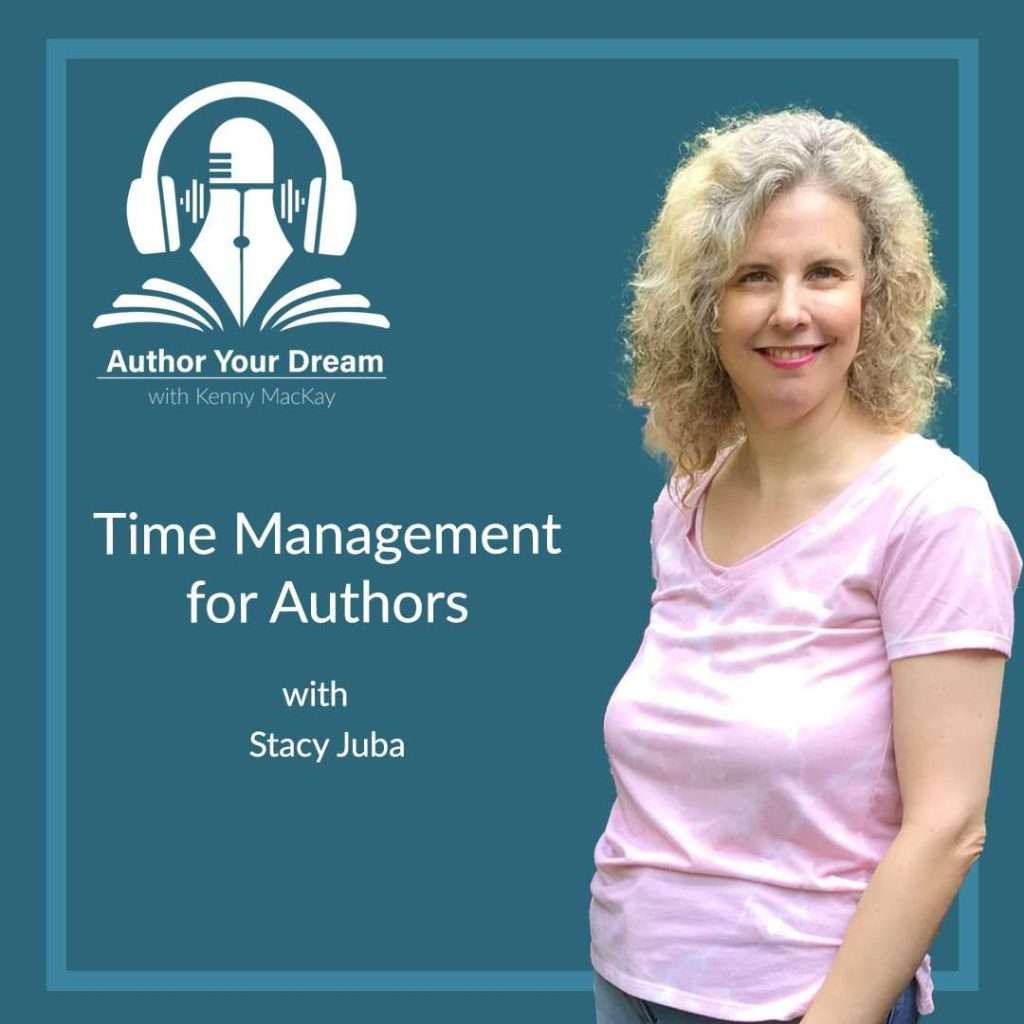
Could you use some time management tips? Then be sure to check out my interview on the Author Your Dream podcast.
Time management is something that a lot of authors struggle with. Host Kenny MacKay and I discussed a number of topics, including effective strategies, time blocking, and automating tasks to help you be more productive.
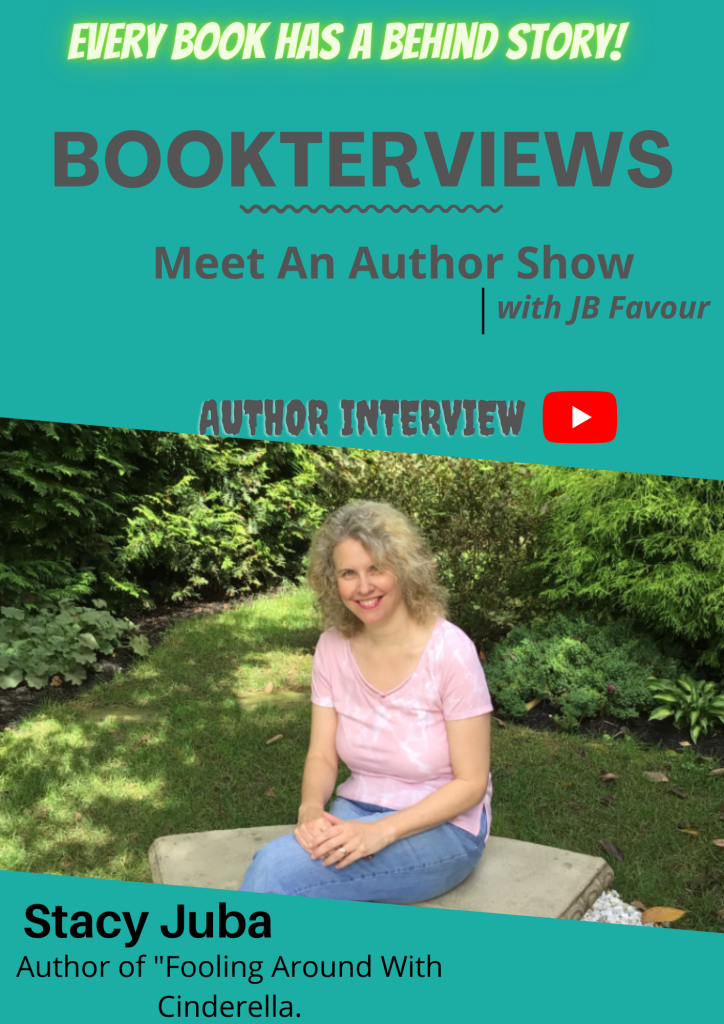
I had a fun time talking about my sweet and sassy chick lit novel, Fooling Around With Cinderella, and answering five princess-themed trivia questions.
Here is the blurb for the book: When twenty-five-year-old Jaine Andersen proposes a new marketing role to the local amusement park, general manager Dylan Callahan charms her into filling Cinderella’s glass slippers for the summer. Her reign transforms Jaine’s ordinary life into chaos that would bewilder a fairy godmother. Secretly dating her bad boy boss, running wedding errands for her ungrateful sisters, and defending herself from the park’s resident villain means Jaine needs lots more than a comfy pair of shoes to restore order in her kingdom…
Hi there! I’m Stacy Juba, an author, freelance editor, and the founder of Shortcuts for Writers. I’d love to connect. If you’re a writer, here are a few ways we can work together:
This self-paced, comprehensive course will guide you through the process of organizing your life one step at a time so that you can become healthier and happier while boosting your creativity and productivity.
It can feel impossible to balance your dreams with a day job, family responsibilities, household chores, and a never-ending list of distractions all vying for your attention. Everything seems urgent and you’re pulled in too many directions, which can result in fatigue, stress, irritability, and frustration that you lack the time and energy to pursue your passion.
Manage Your Time
Through a series of engaging written lessons and short video tutorials that get straight to the point, you’ll assess your life in four key areas: Electronic Clutter, External Clutter, Internal Clutter, and the logistics of Getting Things Done.
Tackling email and social media Organizing your digital files and bookmarks Automating routine tasks Decluttering your home and setting up an inspiring work or writing environment Unwinding, improving focus, and getting into a flow state Handling distractions and interruptions Prioritizing, planning, and breaking down goals into manageable steps Mastering your calendar Pushing through creative blocks and setbacks Nailing your writing or work sessions
If you’re ready to stop spinning your wheels and reclaim control, then this author productivity course will give you powerful and practical tools to succeed and find balance.
Many of you know me as a fiction writer and developmental editor. This course is all about editing different aspects of your life. In addition to the lessons and videos, you’ll get extensive cheat sheets recapping all the key points of the course, a workbook, spreadsheets, habit trackers, and more.
Bonuses
The below bonuses are always included with the course.
5-minute meditation – Unwind with the guided meditation, Pressing Pause, contributed by Melanie Steele. This audio is one of herMonday Meditations for the Writer’s Soul.
4 free Trello boards – Start organizing your life with free Trello templates offered by Brit Poe of Thriving Scribes. Brit, creator of the in-depth course Trello 4 Authors, has shared four boards from her paid program. You’ll get her Day Board, Week Board, Year Board, and Goals and Intentions Board.
Hi there! I’m Stacy Juba, an author, freelance editor, and the founder of Shortcuts for Writers. I’d love to connect. If you’re a writer, here are a few ways we can work together:
I love guesting on podcasts. It’s always so much fun chatting with the host about topics I love. Below are three recent interviews where I discussed everything from online course creation to writing and editing books to turning my hobby into a business. Check out their past episodes also. These are great podcasts to listen to while driving or working around the house.
The Course Creator’s MBA Podcast
Guesting on this podcast was a thrill for me as I’m such a fan girl. I found the podcast invaluable when I was developing my first online course, and I still listen to it regularly. On this episode, Destini Copp interviewed me about expanding my business from writing and editing books to creating online courses for writers. The episode is part of a series where Destini chats with course creators about their journey in their online course business, how they got started, the challenges they’ve experienced, and how they overcame them. My signature course, Book Editing Blueprint: A Step-By-Step Plan to Making Your Novels Publishable, empowers fiction writers to think like an editor so they can save time and money.
Destini and I chatted about how I educated herself on marketing, website development, and sales funnels which has led to success in my online course business.
Undercurrent Stories
I stumbled onto a new podcast favorite in Undercover Stories hosted by Bob Welles. The show explores the interests that people have and seeks to discover more on a wide variety of subjects. Each episode features a guest telling all about their interest, why they do it, and Bob uncovers some fascinating stories in the process.
At some point in their lives many people have thought about writing a book. This desire is sadly often thwarted due to fears about time, commitment, and the technical aspects of editing and publishing. Since I’ve faced all these challenges, I shared with Bob and his listeners how by breaking the writing process into steps, it is possible to both enjoy the creativity of writing and produce a publishable book.
Hustle Like Hannah Podcast
I also enjoyed talking with host Hannah Lockwood on another new favorite, the Hustle Like Hannah Podcast, your “how-to” guide and inspiration for turning your creative side into a business opportunity. Hannah, the owner of Hannah Danielle Dance, chats with inspiring people who have turned their creative hobby into a business, sharing their stories and tips to help listeners realize their potential.
Since the second novel in my Storybook Valley chick lit series, Prancing Around With Sleeping Beauty, features a dance teacher who dreams of opening her own studio, it was fun talking with Hannah, someone who has accomplished that goal. I shared about my passions for writing and publishing books, editing, and developing online courses for writers, and we discussed my journey toward making those dreams come true.
Hi there! I’m Stacy Juba, an author, freelance editor, and the founder of Shortcuts for Writers. I’d love to connect. If you’re a writer, here are a few ways we can work together:
I’m excited to announce that I have a brand new Amazon Influencer store featuring books and products for writers and entrepreneurs. They make great gifts for friends who love writing or who work from home—or for yourself! You’ll find journals, business planners, writing books, home office supplies and decor, tech gadgets and accessories, video and audio equipment, and products to help with the aches and pains that come from hunching over a computer all day. Headaches, eyestrain, backaches, neck aches, carpal tunnel—you’ll find suggestions for all of those ailments and more. I also shared some of my favorite “fun” products to decompress by myself or with my family.
You can check out the main storefront here. Please note that as an Amazon affiliate, I receive a small commission on sales made through my links.
Below, I’ve included direct links to the various subcategories in my Amazon shop. I also embedded a series of three Show and Tell videos where I hold up some featured products that I own and do short reviews.
Let me know in the comments which products look the most interesting to you, if you’ve ever used any of these, or if you have suggestions for my lists.
Hi there! I’m Stacy Juba, an author, freelance editor, and the founder of Shortcuts for Writers. I’d love to connect. If you’re a writer, here are a few ways we can work together:
I’m always excited to tell my followers about another helpful website for writers, and today I’ve got a terrific one to share. I recently met Justin Cox of The Writing Cooperative, which provides advice and encouragement for writers of all genres. Founded by Justin Cox, Jessica Jungton, and Sand Farnia, The Writing Cooperative strives to connect writers and help them grow. Below is an interview with Justin, chock full of valuable resources.
How did The Writing Cooperative come about? When was it founded?
The Writing Cooperative was formed in 2015 as a publication on Medium. Initially, the publication was formed to give people an opportunity to share and peer-edit each others work. It was a small band of people committed to bettering each other. The publication and community grew from there. We’re now one of the largest publications on Medium, publishing writing advice and interviews to over 200k followers.
How did you know your co-founders?
Jessica, Sand and I have never actually met in person. We came together to create The Writing Cooperative because we all were passionate about writing and helping others improve their abilities. We initially communicated and built everything through very long email chains and have since moved to other collaboration tools like Slack and Discord.
What is the goal of The Writing Cooperative?
Our goal is simple: help writers improve. The primary way we reach our goal is through the publication, providing between five and ten new articles each day. In the years since our inception, we’ve also expanded to an active Facebook Group where people from around the world connect and help each other out, a podcast, a store, and a presence on every social media network.
What types of articles have you published on the blog?
Our most popular stories contain quick pieces of advice, often gleaned from working writers. Our Write Now series interviews writers about their habits and styles. There’s a lot writers can learn from authors like Andy Weir, Kristen Arnett, and Pierce Brown.
How does the blog work – how much of it is written in-house and how much comes from submissions? Do readers need to be members of Medium to read the articles?
The vast majority of our publication’s content comes from our open submissions process. Anyone with a Medium account can request to contribute to our publication. So long as the submission is unique and meets our standards, we’ll publish the story to our audience. What’s great about being publishing within Medium is our stories are often distributed outside our publication throughout Medium’s network. This brings an even greater exposure to our contributors’ content. Plus, since Medium pays writers through their Partner Program, writers receive compensation based on the engagement their stories receive. This helps us get great content to share with the world and helps writers earn money for their words.
Since everything we publish is behind Medium’s paywall, a membership is required to read more than three articles a month. Medium only curates stories throughout their network and to people beyond the author’s follower list if they’re behind the paywall. With the added bonus of writer compensation, it’s in everyone’s interest to publish accordingly.
What types of discussion and events happen in your Facebook group?
We have guided discussions a few times a week based on topics that bubble up in the publication or through other discussions. Though most of the conversations happen organically with people looking for support or asking for editing advice.
We run a few writing challenges a year. Most recently we partnered with Inspired Writer for a personal essay contest. Again, our goal is supporting and encouraging writers, and sometimes that means giving away free things.
Tell me about your podcast.
Our podcast, This Week In Writing, launched in July. It’s a different way to engage with writers around the world. Episodes typically include some of our more popular content along with a discussion from our community, though there are a few special edition episodes coming out soon featuring interviews with content writing experts and the authors behind some of our favorite series.
Since we’re all about engaging our community, we wanted the podcast to feature people from our community. Each week we have a discussion segment where listeners can “call in” and be part of the show. This uses a voice message feature, but gives everyone an opportunity to be part of the show. It’s been a lot of fun to hear people “call in” from around the world.
The website talks about live and virtual events. What are some types of events you’ve held?
Earlier this summer we hosted two live comedy events over Zoom. Each show featured four working comedians or comedy writers. They performed a stand-up set or read one of their pieces live and then provided tips for writing comedy. These were great events and a lot of fun to produce. We sold tickets so we could compensate the comedians. We have ideas for additional live shows later this fall, so stay tuned to learn about those.
What can people expect if they sign up for The Write-Up?
The Write Up is our monthly newsletter. Over 63k people trust us with their email address, so we strive to make The Write Up something they want to read. The Write Up is where we make our big announcements, like when we launched our podcast or if we’re hosting a giveaway. It also typically includes an actionable quick tip and links to some of our favorite stories from the past month.
Tell me about your Patreon program.
Our Patreon is a way for people who want to support us monetarily to do so. We don’t run ads on anything we do, so Patreon is a way to help keep Jessica, Sand, and I going. For the financial support, our patrons receive perks, like discounts on ProWritingAid and access to our priority submission system.
Tell me about your own writing? What do you write?
I write across genres, but mainly in the realm of personal essays. Because of my work with The Writing Cooperative, I write a lot of writing guides and encouragement for writers. Some of my most popular stories include my guides to all things Medium and freelance writing. Though, what I’ve been exploring lately is old-fashioned blogging through the resurgence of newsletters. My weekly newsletter, This Just In, provides a new outlet for creativity that goes directly to my readers. It’s been a lot of fun to experiment with.
More About Justin
Justin Cox is a content writer living in Orlando, FL. His work has appeared in Wired, Film School Rejects, Heart Support, The Billfold, ProWritingAid, PS I Love You, The Writing Cooperative, and more. Justin is also the co-founder of The Writing Cooperative, a publication and community for writers.
Hi there! I’m Stacy Juba, an author, freelance editor, and the founder of Shortcuts for Writers. I’d love to connect. If you’re a writer, here are a few ways we can work together:




 As you explore the website, you’ll also see brand-new images from a recent photo shoot that perfectly capture the creative, approachable vibe I wanted for the site.

